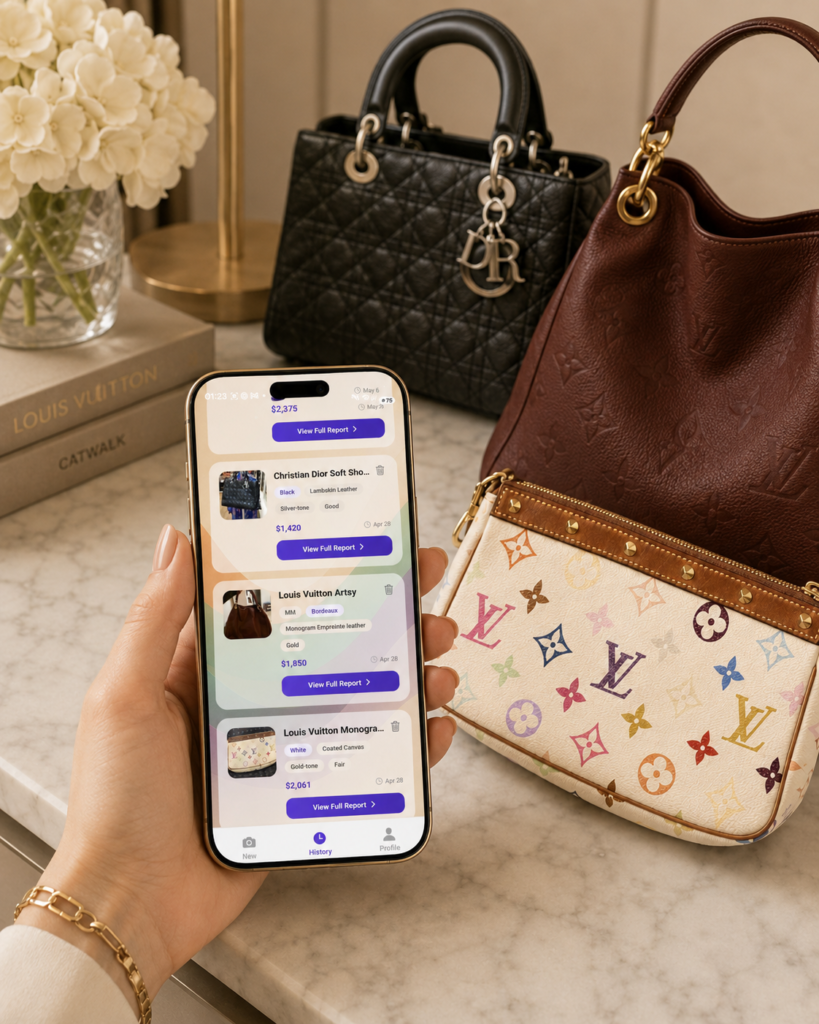
How Luxury Bag Pricing Works
The Core Pillars of Luxury Resale Valuation
Determining the price of a pre-owned designer bag involves balancing fixed data points with fluid market trends. While a brand name provides a baseline, the final estimate is built upon four primary pillars:- Brand and Model Equity: Certain brands, such as Hermès, Chanel, and Louis Vuitton, maintain higher retention rates due to scarcity and consistent retail price increases.
- Condition Grading: The physical state of the leather, hardware, and interior lining.
- Market Liquidity: How quickly a specific model sells on the open market.
- Provenance and Completeness: The presence of original packaging, receipts, and authenticity certificates.
The Role of Real-Time Market Data
The most significant factor in modern pricing is the use of “comparables.” Just as in real estate, a bag is worth what similar items have recently sold for—not what they are currently listed for. When using comparable listings to price luxury bags, it is essential to filter for “sold” items across various platforms to filter out aspirational pricing that doesn’t result in a transaction.LuxPricer aggregates these data points, adjusting for the nuances of different resale platforms. A bag sold on a peer-to-peer marketplace may fetch a different price than one sold through a high-end consignment boutique due to commission structures and buyer trust levels.Ready to Value Your Luxury?
Download the LuxPricer App
Get instant, market-driven pricing estimates powered by real-time luxury resale data.


How Condition Impacts the Final Estimate
Condition is often the most subjective part of the pricing equation, yet it has the most drastic impact on the final number. A “Pristine” or “Never Worn” bag can often command a price close to, or even above, its original retail value if the model is in high demand. Conversely, a bag with visible “Fair” wear might see a 40% to 60% reduction from its original price.Key areas that professional authenticators and pricing algorithms look at include:- Corner Wear: Scuffing or thinning of the leather at the base.
- Handle Integrity: Darkening (patina) on vachetta leather or softening of structured handles.
- Hardware Oxidation: Scratches, plating loss, or tarnishing on zippers and clasps.
- Interior Odors: The presence of perfume, smoke, or storage scents.
The Scarcity and Demand Multiplier
Why does a used Hermès Birkin often cost more than a new one? The answer lies in the scarcity multiplier. When a brand limits supply through waitlists or boutique-only access, the secondary market price rises to reflect the “convenience fee” of immediate availability.Conversely, “trendy” bags that are produced in high volumes may see a sharp decline in value once the initial fashion cycle ends. This is why it is vital to consider the factors that affect luxury bag resale value beyond just the brand name. Seasonality, celebrity endorsements, and even the discontinuation of a specific colorway can cause sudden fluctuations in market demand.The LuxPricer Advantage
If you are unsure where your item sits in the current market, LuxPricer provides an instant, data-backed estimate. By scanning hundreds of historical sales and current market listings, we remove the guesswork from the process, giving you a clear starting point for your sale or purchase.Ready to Value Your Luxury?
Download the LuxPricer App
Get instant, market-driven pricing estimates powered by real-time luxury resale data.
Interpreting Price Ranges
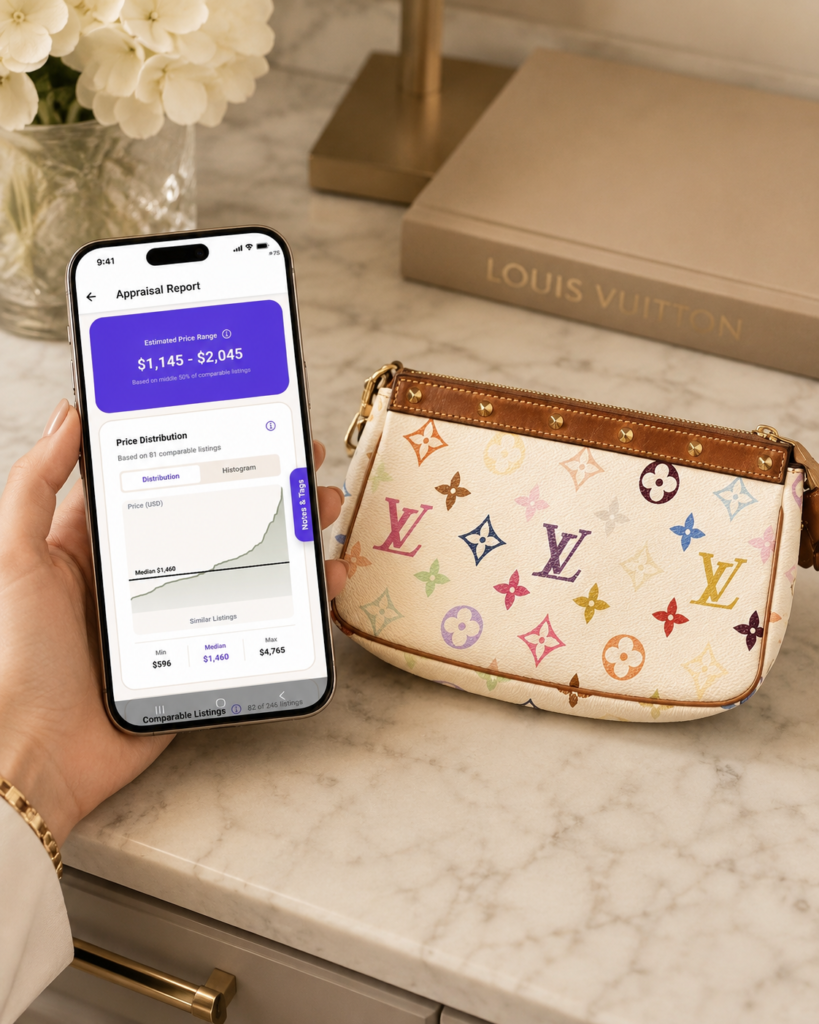
No pricing tool can give a single, definitive dollar amount because the market is always in flux. Instead, professional valuations are typically presented as a range. Learning how to read and interpret luxury bag price ranges allows sellers to set a “floor” price (the lowest they are willing to accept) and a “ceiling” price (the maximum the market will likely bear).
The lower end of the range usually accounts for a quick sale to a professional reseller or “buy-out” site, while the higher end represents the potential return from a direct-to-consumer sale, which may take longer to finalize.
The Math Behind the Estimate: A Step-by-Step Approach
To arrive at a final estimate, follow a structured sequence of adjustments:
1. Establish the Baseline
We start with the current retail price of the bag. If the bag is vintage or discontinued, we use the last known retail price adjusted for inflation or the current price of the closest equivalent model.
2. Apply the Brand Retention Percentage
Each brand has a known “retention rate.” For example, a classic Chanel Flap bag might retain 85-100% of its value, while a contemporary brand might retain 30-50%. This percentage creates our initial “Market Base.”
3. Adjust for Condition
We subtract value based on the condition grading.
- Excellent: -0% to -10% from Market Base.
- Very Good: -15% to -25% from Market Base.
- Good: -30% to -50% from Market Base.
4. Add/Subtract for Accessories
The presence of the original “full set”—box, dust bag, and authenticity card—can add 5% to 10% to the final estimate. For certain brands, the absence of an authenticity card is a significant detractor, as it increases the burden of proof on the seller.
Final Considerations for Sellers
Understanding how luxury bag pricing works is the first step toward a successful transaction. It is important to remember that the resale market is cyclical. Prices for certain styles may dip in the winter and rise in the spring, or fluctuate based on global economic conditions.
By focusing on objective data—condition, comparables, and brand equity—you can approach the resale market with confidence. Whether you are looking to liquidate an investment or find a fair price for a pre-loved treasure, a disciplined approach to pricing ensures that you don’t leave money on the table or overpay for your next acquisition.
Ready to Value Your Luxury?
Download the LuxPricer App
Get instant, market-driven pricing estimates powered by real-time luxury resale data.