Luxury Handbag Resale Pricing: The Complete Guide
The secondary market for high-end fashion has evolved from a niche hobby into a sophisticated global economy. For collectors and investors, understanding luxury handbag resale pricing is the difference between a successful sale and a listing that sits stagnant for months. Pricing a pre-owned bag is not a matter of guesswork; it is a data-driven process that balances historical sales, current market demand, and the specific physical attributes of the item in question.
This guide serves as the foundation for mastering the resale market. Whether you are selling a classic Chanel Flap or a trendy Bottega Veneta, the principles of valuation remain consistent. By learning the mechanics of the market, you can accurately estimate the value of your collection and ensure you receive a fair price when it comes time to sell.
The Fundamentals of Resale Valuation
At its core, the price of a pre-owned luxury bag is determined by what a buyer is willing to pay at a specific moment in time. Unlike retail pricing, which is set by the brand and remains static until a price increase occurs, resale pricing is fluid. It reacts to trends, supply shortages, and even macroeconomic shifts.
To understand the “why” behind a specific valuation, you must first look at how luxury bag pricing works. This methodology involves synthesizing multiple data points—including the original retail price, the current replacement value, and the historical performance of the specific model on the secondary market. By combining these inputs, experts can establish a baseline value that reflects the bag’s intrinsic worth and its market desirability.
The Role of Brand Equity
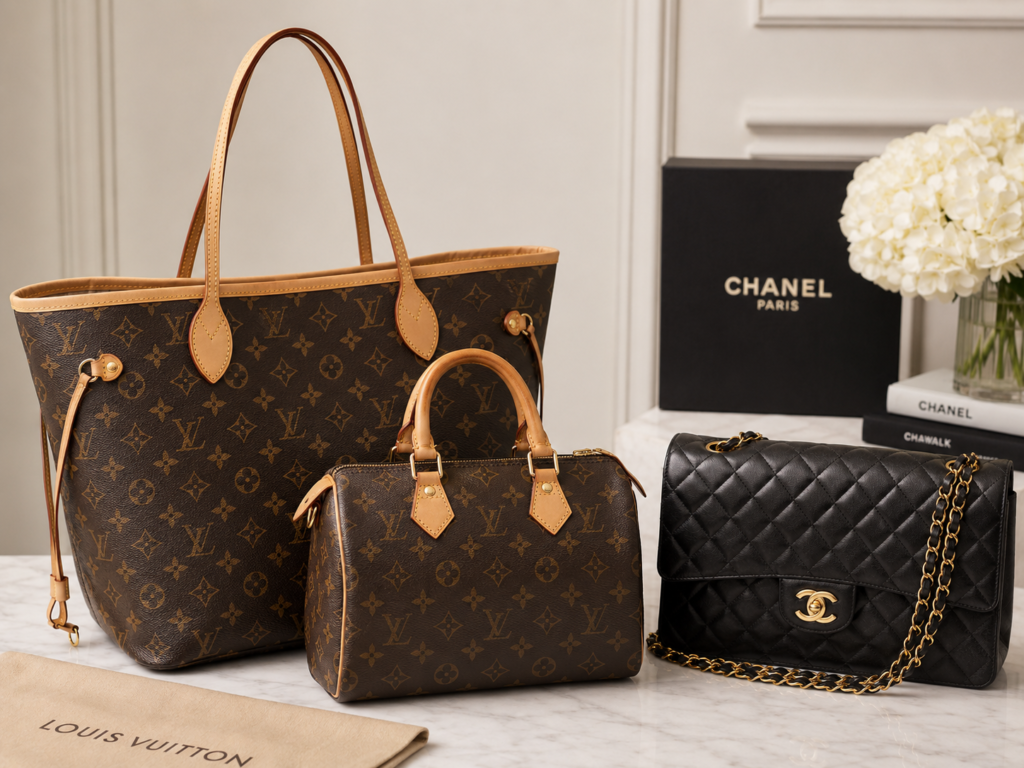
Not all brands are created equal in the resale market. “The Big Three”—Hermès, Chanel, and Louis Vuitton—consistently command the highest price retention. In some cases, such as with the Hermès Birkin or Kelly, the resale price can significantly exceed the original retail price due to scarcity. Other brands may see a steeper depreciation immediately after purchase, requiring a different strategic approach to pricing.
Key Drivers of Resale Value
While the brand name provides the baseline, the specific characteristics of an individual bag will move the price up or down within a range. There are several critical factors that affect luxury bag resale value, ranging from the obvious to the subtle.
- Physical Condition: This is the most significant variable. A bag in “Boutique Fresh” condition will always command a premium over a bag with corner wear, interior stains, or tarnished hardware.
- Completeness: The presence of original accessories—such as the dust bag, box, authenticity card, and original receipt—adds layers of trust and value for the buyer.
- Color and Material: Neutral colors like Black, Gold, and Étoupe generally hold value better than seasonal or “pop” colors. Similarly, durable leathers like Epsom or Caviar often price higher than delicate materials like lambskin or suede.
- Market Scarcity: If a bag is discontinued or part of a limited edition run, the price may increase regardless of its age.
Understanding these drivers allows you to look at your bag objectively. It is common for sellers to have an emotional attachment to a piece, but the market only rewards the physical and logistical attributes that a buyer can verify.
Ready to Value Your Luxury?
Download the LuxPricer App
Get instant, market-driven pricing estimates powered by real-time luxury resale data.


How to Navigate Price Ranges
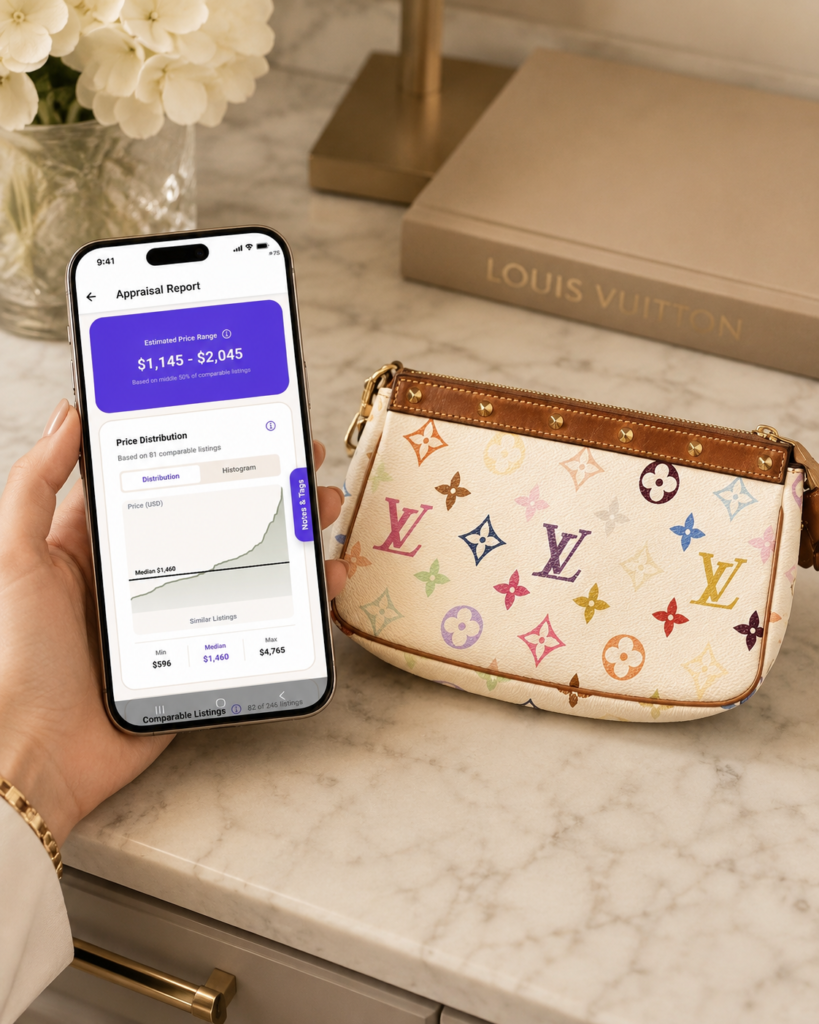
When you research the value of a bag, you will rarely find a single, fixed number. Instead, you will encounter a spectrum. Learning how to read and interpret luxury bag price ranges is essential for setting a competitive listing price. Most valuation tools will provide a low, median, and high estimate.The low end of the range typically represents bags with significant wear or those missing key accessories. The median represents the “fair market value” for a bag in good condition with standard accessories. The high end is reserved for pristine, “full set” examples or rare colorways. To pick the right number within that range, you must be honest about where your bag sits in comparison to others currently available on the market.The Importance of Accuracy
Pricing too high can lead to your bag being overlooked as new listings appear. Pricing too low might result in a quick sale, but you leave money on the table. The goal is to find the “sweet spot” where the price reflects the bag’s quality while remaining attractive to savvy shoppers who are comparing multiple listings simultaneously.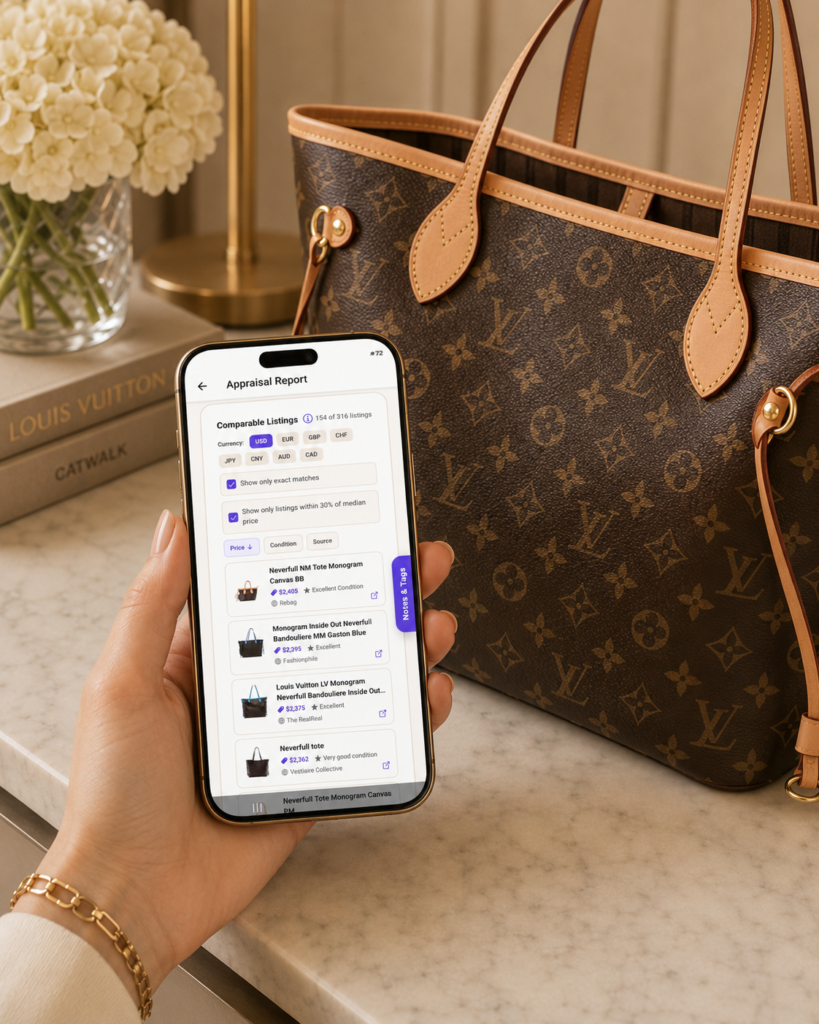
The Power of Comparable Listings
Data is the most valuable tool in a seller’s arsenal. You should never price a bag in a vacuum. Instead, you should spend time using comparable listings to price luxury bags. This involves looking at both active listings (what people are asking) and sold listings (what people actually paid).Active listings tell you about your current competition. If there are twenty identical Louis Vuitton Neverfulls for sale, you need to ensure your price is competitive relative to their condition. However, sold listings are the true indicator of market value. They prove that a buyer was willing to part with a specific amount of money for that exact item. When analyzing “comps,” pay close attention to the date of the sale; a price from two years ago may no longer be relevant in today’s shifting market.Filtering for Accuracy
When looking at comparables, ensure you are comparing “apples to apples.” A Chanel Boy Bag in Medium size should not be compared to a Small size. A bag in “Excellent” condition should not be priced against one in “Fair” condition. The more specific your comparison, the more accurate your estimate will be.The LuxPricer Approach to Valuation
Manually tracking every auction house, consignment site, and peer-to-peer marketplace is a time-consuming task. This is where technology becomes an asset. To see how these complex data points are synthesized into a single, actionable estimate, you can explore how LuxPricer works. The app automates the collection of market data, applying the same rigorous standards used by professional authenticators and resellers to give you a clear view of your bag’s current worth.Ready to value your collection? Use LuxPricer to get an accurate estimate based on real-time market data and professional pricing logic.Ready to Value Your Luxury?
Download the LuxPricer App
Get instant, market-driven pricing estimates powered by real-time luxury resale data.
Common Pitfalls in Luxury Resale Pricing
Even experienced collectors can make mistakes when valuing their items. Avoiding these common errors will help you maintain the integrity of your investment portfolio.
Overestimating Condition
The most common mistake is “condition inflation.” Sellers often view their bags through a lens of affection, overlooking small scratches or softened leather. To get an accurate price, you must inspect your bag under bright, natural light and compare it strictly against industry-standard condition guides. If you are unsure, it is always safer to price the bag one tier lower than you think it is.
Ignoring Platform Fees
When you see a bag sold for $3,000 on a major consignment platform, remember that the seller did not take home $3,000. Most platforms charge a commission ranging from 15% to 40%. When setting your price, you must account for these fees to ensure your net take-home pay meets your expectations. If you are selling directly to another collector, you can often price the bag slightly lower than a consignment shop while still making more profit.
Neglecting Seasonality
The time of year can influence luxury handbag resale pricing. Bright, colorful bags and straw or wicker materials often see a price increase in the spring and summer. Darker leathers and heavier styles like the Hermès Jypsiere may perform better in the fall and winter. Additionally, the “holiday rush” in November and December can drive up prices for gift-ready items in pristine condition.
The Future of Luxury Bag Valuation
The luxury resale market is becoming increasingly transparent. As more data becomes available, the gap between “asking price” and “sale price” is narrowing. Buyers are more educated than ever, often using the same tools and data sources as sellers to verify they are getting a fair deal.
By mastering the components of pricing—from the initial methodology to the analysis of comparable sales—you position yourself as a sophisticated participant in the circular fashion economy. Whether you are looking to liquidate a single piece or manage a large investment portfolio of handbags, a disciplined approach to pricing is your most effective strategy for success.
Ready to Value Your Luxury?
Download the LuxPricer App
Get instant, market-driven pricing estimates powered by real-time luxury resale data.
Summary of Pricing Steps
- Identify the exact model, size, material, and year of production.
- Perform a rigorous condition assessment, noting any flaws.
- Gather all original accessories to maximize the “completeness” factor.
- Analyze recent sold comparables to establish a market baseline.
- Consult a professional valuation tool to see where your bag fits within current price ranges.
- Adjust for platform fees and current market trends.
Pricing is both an art and a science. While the data provides the framework, your understanding of the nuances of the luxury market allows you to refine that data into a successful sale. Use the resources linked throughout this guide to dive deeper into each aspect of the valuation process and take control of your luxury handbag investments.