How to Read and Interpret Luxury Bag Price Ranges
Ready to Value Your Luxury?
Download the LuxPricer App
Get instant, market-driven pricing estimates powered by real-time luxury resale data.


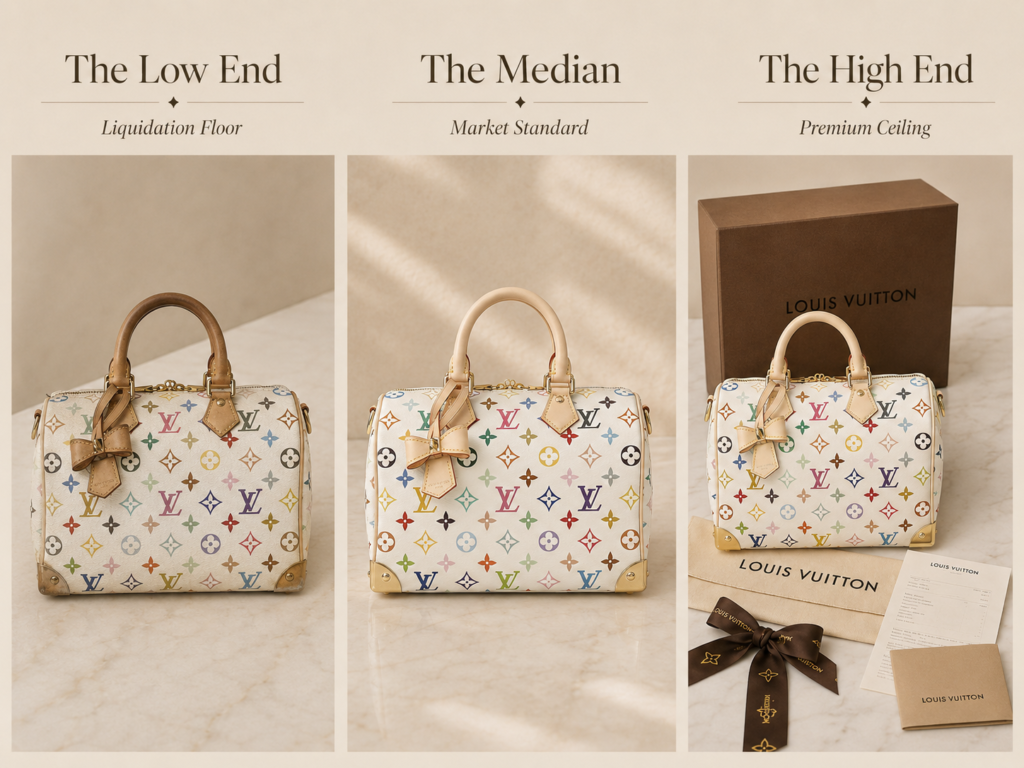
The Anatomy of a Luxury Bag Price Range
A price range is not a suggestion; it is a data-driven reflection of the current secondary market. It accounts for the volatility of buyer demand and the varying conditions of available inventory. To use these numbers effectively, you must first understand what each data point represents.The Low End: The Liquidation Floor
The low end of the range typically represents the “buy-it-now” price for a motivated seller. This figure is often associated with bags in “Good” or “Fair” condition, or items that lack original accessories like dust bags and authenticity cards. If you price at this level, you are prioritizing speed over maximum profit. This is the price point where professional resellers often buy inventory to ensure a healthy margin on the flip.The Median: The Market Standard
The median is the most common price point for a successful transaction. It represents a “Great” condition bag with standard wear. When you are using comparable listings to price luxury bags, the median is your safest bet for a sale within a standard 30-day window. It balances value for the buyer with a fair return for the seller.The High End: The Premium Ceiling
The high end of the luxury bag price range is reserved for “Pristine” or “Never Worn” items. These bags often include the full original set: the box, ribbon, dust bag, original receipt, and any relevant certificates. This price is achievable, but it requires patience. You are waiting for a specific collector who is willing to pay a premium for a “like-new” experience without the boutique price tag.How to Pick Your Number Within the Range
Once you have your range, you need to select a single number for your listing. This decision should be based on three primary factors: condition, completeness, and urgency.Assessing Physical Condition
Be objective about your bag’s flaws. Scuffed corners, tarnished hardware, or interior odors will immediately pull your price toward the lower end of the range. Conversely, a bag that has been professionally stored and shows no signs of use can comfortably sit at the top 10% of the range. To understand how specific wear patterns influence these numbers, you can explore the various factors that affect luxury bag resale value.The Power of Provenance and Accessories
A “Full Set” (box, dust bag, and receipt) can add 10% to 20% to the final sale price compared to a “naked” bag. If you have the original paperwork, you have the leverage to push your price toward the high end of the range. If you are missing these items, you should generally price at or slightly below the median to remain competitive.Your Timeline for Selling
If you need cash immediately, pricing at the bottom of the range will trigger alerts for buyers who have saved searches for that specific model. If you are not in a rush, you can “test the market” by listing at the high end and gradually lowering the price by 5% every two weeks until you receive an offer.Strategic Pricing: Avoiding Common Pitfalls
One of the most difficult aspects of resale is removing emotional attachment from the equation. Many sellers struggle with the “endowment effect,” where they value their own property higher than the market does simply because they own it. To ensure you are making a data-backed decision, it is vital to learn how to avoid underpricing your luxury bag while remaining realistic about its flaws.Underpricing is a common mistake, but overpricing is equally dangerous. An overpriced bag becomes “stale” in the eyes of savvy buyers. If a listing has been active for 60 days without an offer, the market is telling you that your chosen number is too high for the current demand level.How LuxPricer Generates These Ranges
Our algorithm doesn’t just look at what people are asking for their bags; it looks at what people are actually paying. By analyzing hundreds of listings across multiple platforms, we provide an estimate that reflects real-world liquidity. If you want to dive deeper into the mechanics of our valuations, read our guide on how luxury bag pricing works.Ready to see where your bag sits? Use the LuxPricer app to get an instant, data-driven estimate of your bag’s current market value based on real-time sales data.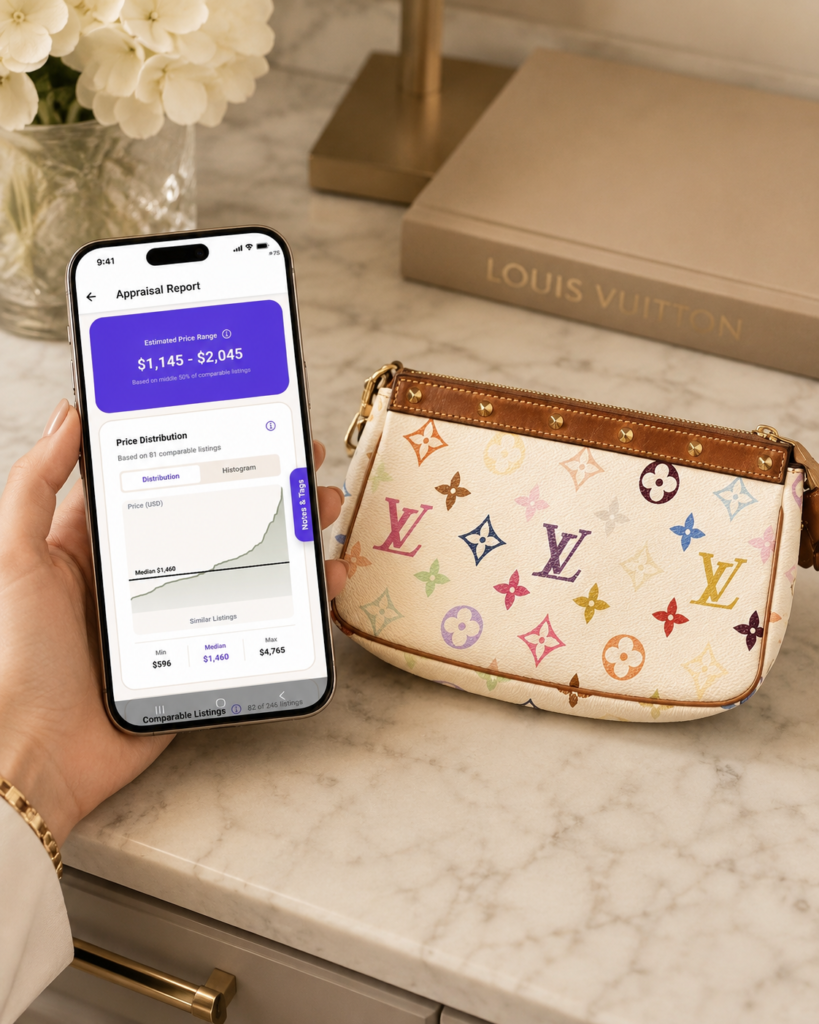
Ready to Value Your Luxury?
Download the LuxPricer App
Get instant, market-driven pricing estimates powered by real-time luxury resale data.
Interpreting Market Trends Within the Range
Luxury bag price ranges are not static; they shift based on seasonal demand and fashion cycles. For example, a bright colored Hermès Epsom leather bag might see its high-end range increase during the spring and summer months, while neutral tones remain steady year-round.
- Upward Trends: If a specific model is discontinued or “vaulted” by the brand, you may see the entire range shift upward. In these cases, pricing at the very top of the range is recommended.
- Downward Trends: If a brand over-saturates the market with a specific style, the “floor” of the range may drop. In this scenario, being the first to price aggressively at the median can help you exit the investment before the value drops further.
The Role of Comparable Listings
Before finalizing your number, look at what else is currently available. If the LuxPricer range for a Chanel Boy Bag is $3,500 to $4,500, and there are ten other listings at $3,800 in similar condition to yours, listing at $4,200 will likely result in zero inquiries. You must position yourself strategically against the active competition. This is why using comparable listings to price luxury bags is a critical step in the final stage of your pricing strategy.
Summary Checklist for Choosing a Price
To pick the right number within your luxury bag price range, follow this simple workflow:
- Step 1: Identify the range using LuxPricer.
- Step 2: Deduct for condition issues (scuffs, stains, odors).
- Step 3: Add for “Full Set” status (box, papers, dust bag).
- Step 4: Check active competitors to ensure you aren’t an outlier.
- Step 5: Set your price and be prepared to negotiate within 5-10% of that figure.
By treating the price range as a map rather than a single destination, you gain the flexibility to navigate the resale market with confidence. Whether you are looking for a quick sale or the highest possible return, understanding the nuances of the low, median, and high estimates will ensure you never leave money on the table.
Ready to Value Your Luxury?
Download the LuxPricer App
Get instant, market-driven pricing estimates powered by real-time luxury resale data.