Using Comparable Listings To Price Luxury Bags
The Role of Comps in the Pricing Process
Before diving into specific listings, it is helpful to understand how luxury bag pricing works on a fundamental level. While brand heritage and scarcity play a role, the current supply and demand for a specific model at a specific moment in time are the primary drivers of value. Comps serve as the evidence of that supply and demand.When you analyze luxury bag comparable listings, you are essentially performing a mini-market analysis. You are looking for “twins” of your bag—items that share the same brand, model, size, material, and condition. The closer the match, the more reliable the data point. This process is a core component of Luxury Handbag Resale Pricing: The Complete Guide, as it provides the empirical data needed to validate your price point.Where to Find Reliable Comparable Listings
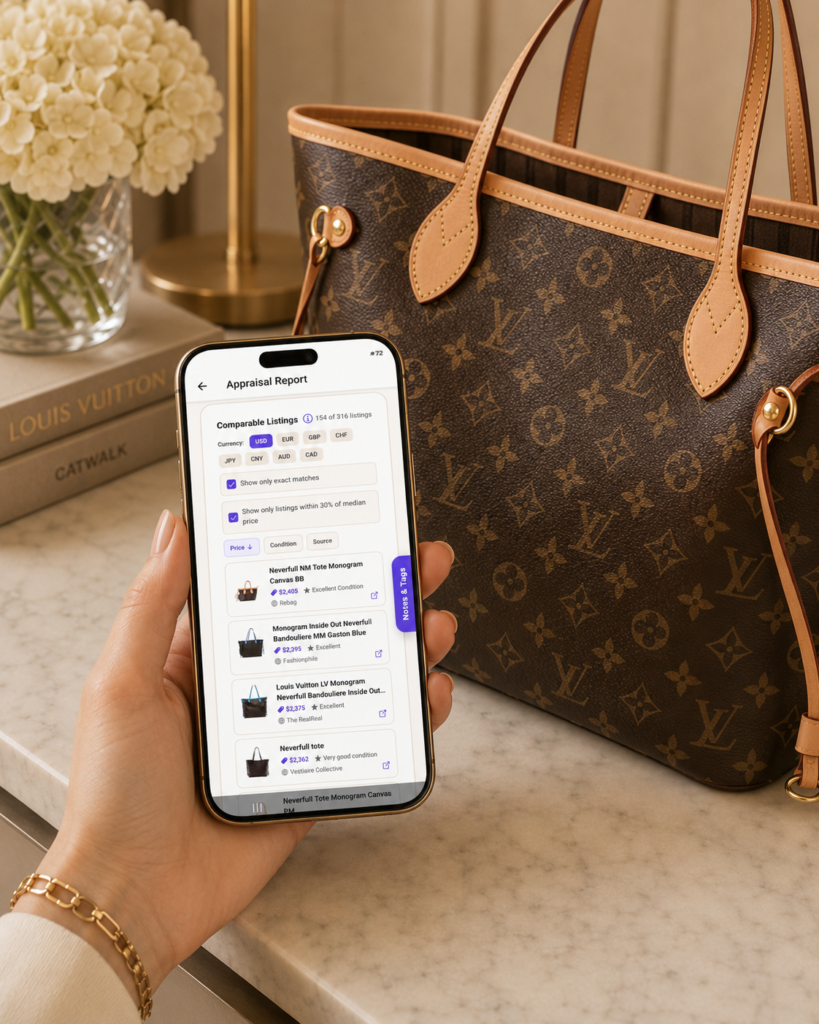
Not all data sources are created equal. To get a comprehensive view of the market, you should look across several types of platforms:- Peer-to-Peer Marketplaces: Sites like eBay, Poshmark, and Vestiaire Collective are excellent for seeing a high volume of listings. eBay is particularly useful because it allows you to filter specifically for “Sold” listings, which is the most critical data point.
- Consignment Giants: Platforms like The RealReal or Fashionphile provide “asking prices” that reflect professional authentication and photography. Keep in mind that these prices often include a significant commission for the platform.
- Auction Houses: For ultra-rare or “holy grail” bags like the Hermès Birkin or Kelly, specialized auction results provide the most accurate estimate for high-value investment pieces.
Ready to Value Your Luxury?
Download the LuxPricer App
Get instant, market-driven pricing estimates powered by real-time luxury resale data.


Filtering for Accuracy: Finding Your “Twins”
A common mistake is comparing a bag to a listing that looks similar but has different underlying value drivers. To ensure your luxury bag comparable listings are truly comparable, you must filter by these specific criteria:Model and Size
A Chanel Classic Flap in the “Medium” size has a different market velocity and price point than the “Maxi” size. Ensure you are comparing apples to apples by verifying the exact dimensions and model names.Material and Hardware
Leather types can significantly impact value. For example, a Louis Vuitton bag in Empreinte leather will typically command a different price than the same model in Monogram Canvas. Similarly, the color of the hardware (Gold vs. Silver vs. Ruthenium) can influence buyer preference and price.Condition Grade
This is the most subjective and difficult filter to apply. A bag in “Pristine” condition with its original box and receipt will always outperform a “Good” condition bag with corner wear and no accessories. When looking at comps, be honest about your bag’s flaws and look for listings that exhibit similar wear patterns.How to Compare Sold vs. Asking Prices
One of the most important distinctions to make during your research is the difference between what a seller wants and what a buyer actually paid. You must learn how to compare sold vs. asking prices to avoid the trap of “aspirational pricing.”Asking prices (active listings) tell you what your current competition looks like. If there are ten identical bags listed at $2,000, you likely cannot list yours for $2,500 and expect a quick sale. However, sold prices tell you the “truth” of the market. If those same bags have historically sold for $1,700 despite being listed at $2,000, the $1,700 figure is your true benchmark. Always weight sold data more heavily than active listings when calculating your estimate.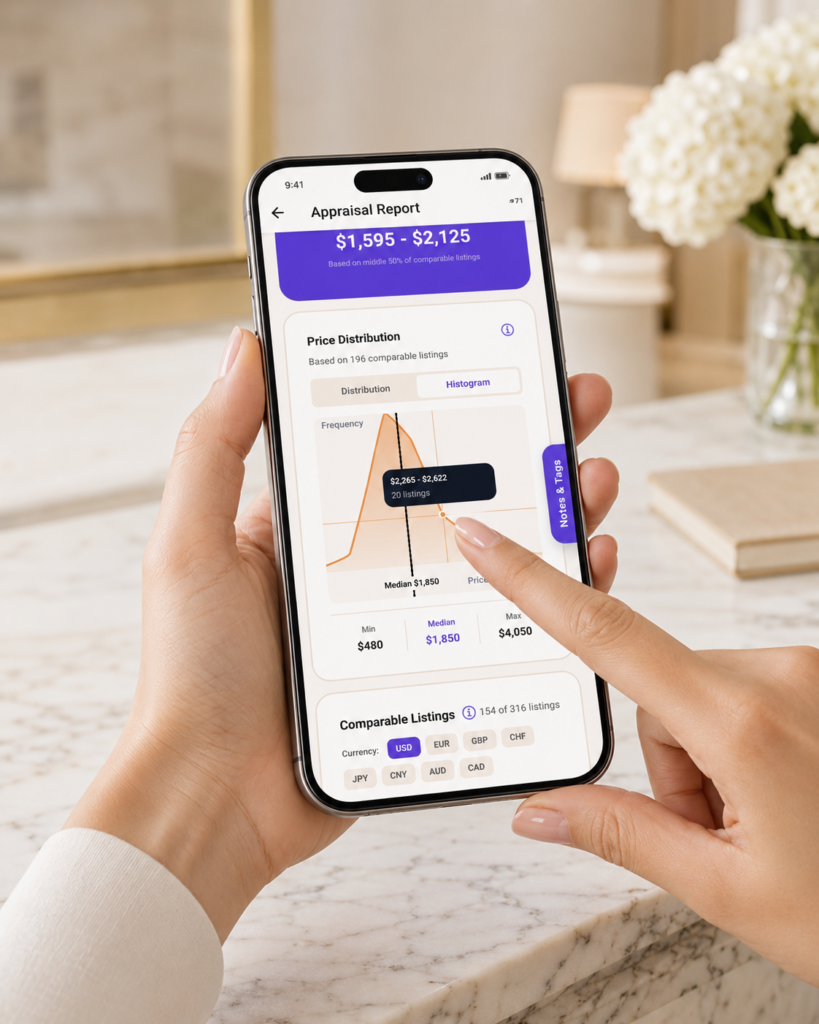
Weighting the Data
Once you have gathered 5 to 10 solid luxury bag comparable listings, you need to weight them to reach a final number. Not every comp is equally relevant. Use the following hierarchy to prioritize your data:
- Recency: A sale from last week is more relevant than a sale from six months ago. The luxury market fluctuates based on trends and brand price increases.
- Platform Similarity: If you plan to sell your bag on a peer-to-peer site, prioritize comps from that same site. Prices can vary between platforms due to buyer trust and fee structures.
- Completeness: Give more weight to comps that include the “full set” (dust bag, box, authenticity card) if your bag also includes these items.
If you find that your research is yielding a wide variety of prices, it may be time to look at how to read and interpret luxury bag price ranges. Understanding the spread between the “low” and “high” ends of the market can help you decide whether to price for a fast sale or hold out for a premium buyer.
Using LuxPricer to Simplify Your Research
Manually searching through dozens of websites to find luxury bag comparable listings is time-consuming and often confusing. LuxPricer simplifies this process by aggregating market data and analyzing current trends for you. Instead of guessing which filters to apply, our tool provides a data-driven estimate based on thousands of real-world data points, helping you set a price with confidence in seconds.
Ready to Value Your Luxury?
Download the LuxPricer App
Get instant, market-driven pricing estimates powered by real-time luxury resale data.
Adjusting for Market Trends
The final step in using comps is adjusting for the “now.” Even the best historical data can be disrupted by sudden market shifts. For instance, if a brand announces a 15% retail price increase, the resale value of those bags often rises shortly after. Conversely, if a specific style is declared “out” by major fashion influencers, demand may drop regardless of what the bag sold for three months ago.
Consider the factors that affect luxury bag resale value beyond just the physical item. Seasonality, brand heat, and economic shifts all play a role. If you are selling a beach-friendly tote in December, your comps might reflect a slower market than if you were selling that same bag in May.
Common Pitfalls to Avoid
When analyzing luxury bag comparable listings, watch out for these common errors:
- Ignoring “Best Offer Accepted” Listings: On platforms like eBay, a listing may show a price with a strikethrough, indicating a lower offer was accepted. The original price is not the sold price; you must investigate the actual transaction value where possible.
- Overestimating Condition: Most sellers believe their bags are in better condition than they actually are. If you price based on “Excellent” comps but your bag has minor interior staining, you will likely face returns or requests for partial refunds.
- Relying on Outdated Comps: In the fast-moving world of luxury resale, data older than six months is often obsolete. Stick to the most recent 90 days for the most accurate estimate.
By systematically finding, filtering, and weighting luxury bag comparable listings, you move from guessing to knowing. This disciplined approach ensures that your bag is priced correctly for the current market, maximizing your chances of a successful and profitable sale.
Ready to Value Your Luxury?
Download the LuxPricer App
Get instant, market-driven pricing estimates powered by real-time luxury resale data.