How to Compare Sold vs. Asking Prices
When preparing to list a high-end accessory for sale, most sellers begin by browsing current listings on platforms like Fashionphile, Rebag, or eBay. While these numbers provide a snapshot of the current market landscape, they only tell half the story. To achieve an accurate valuation, you must understand the critical distinction between sold vs asking price luxury bag data.
Relying solely on what other sellers hope to get can lead to stagnant listings and missed opportunities. By learning how to weight these two data points, you can position your item to sell quickly without leaving money on the table. This guide explores the psychological and economic factors behind pricing and how to use market evidence to your advantage.
Price Check
Want to estimate a luxury bag faster?
Use LuxPricer to get a structured resale estimate from your phone, with market context and comparable pricing signals.


The Psychology of Asking Prices
An asking price represents a seller’s aspiration. It is often influenced by the original retail price, the seller’s emotional attachment to the item, or a desire to leave room for negotiation. In many cases, asking prices are set high to test the market or to account for high platform fees.
While asking prices indicate the current competition, they are not proof of value. A Chanel Flap Bag might be listed for $8,500 for months without a single inquiry. If you price your bag based on that listing, you are mirroring a strategy that may not be working. Asking prices show you the “ceiling” of the market, but they rarely reflect the actual liquidity of the item.

Why Sold Comps are the Gold Standard
Sold comparables (or “comps”) are the only objective evidence of what a buyer is actually willing to pay. These figures represent completed transactions where money has changed hands. When analyzing a sold vs asking price luxury bag comparison, the sold price is the true indicator of fair market value.
Sold data accounts for the “invisible” factors that asking prices ignore, such as private offers, seasonal dips, and the urgency of the buyer. For example, while a Louis Vuitton Neverfull might have an average asking price of $1,600, the sold data might reveal that most transactions actually close at $1,350. Ignoring this $250 discrepancy is a common mistake that leads to overpricing.
Using Sold Comps to Set a True Floor
One of the most effective ways to use historical data is to establish a baseline for your listing. You can how to avoid underpricing your luxury bag by using sold comps to set a true floor, ensuring that even if you accept a lower offer, you are still within the healthy range of recent market activity. This prevents the “race to the bottom” often seen when sellers panic and drop prices too quickly.
Ready to Value Your Luxury?
Download the LuxPricer App
Get instant, market-driven pricing estimates powered by real-time luxury resale data.
How to Weight Sold vs. Asking Prices
Professional resellers do not look at these numbers in isolation. Instead, they apply a weighted approach based on the rarity and demand of the specific model. Here is how to balance the two:
- High-Volume Models: For bags like the Goyard St. Louis or the Gucci Marmont, sold data should carry about 80% of the weight in your decision. Because there is a high volume of transactions, the sold price is very stable.
- Rare or Limited Edition Items: If you are selling a runway piece or a discontinued colorway, sold data may be scarce. In this instance, you might weight asking prices at 50% or higher to see how other collectors are currently valuing the rarity.
- Trend-Dependent Items: For “it-bags” that are currently peaking in popularity, asking prices can sometimes be a better indicator of the immediate future than sold data from three months ago.
Understanding these nuances is a core part of using comparable listings to price luxury bags effectively. By looking at both ends of the spectrum, you create a pricing strategy that is both competitive and profitable.
For Resellers & Boutiques
Turn market comps into a clearer selling price
LuxPricer helps you move from scattered listings to a more consistent valuation workflow.
Analyzing the “Spread”
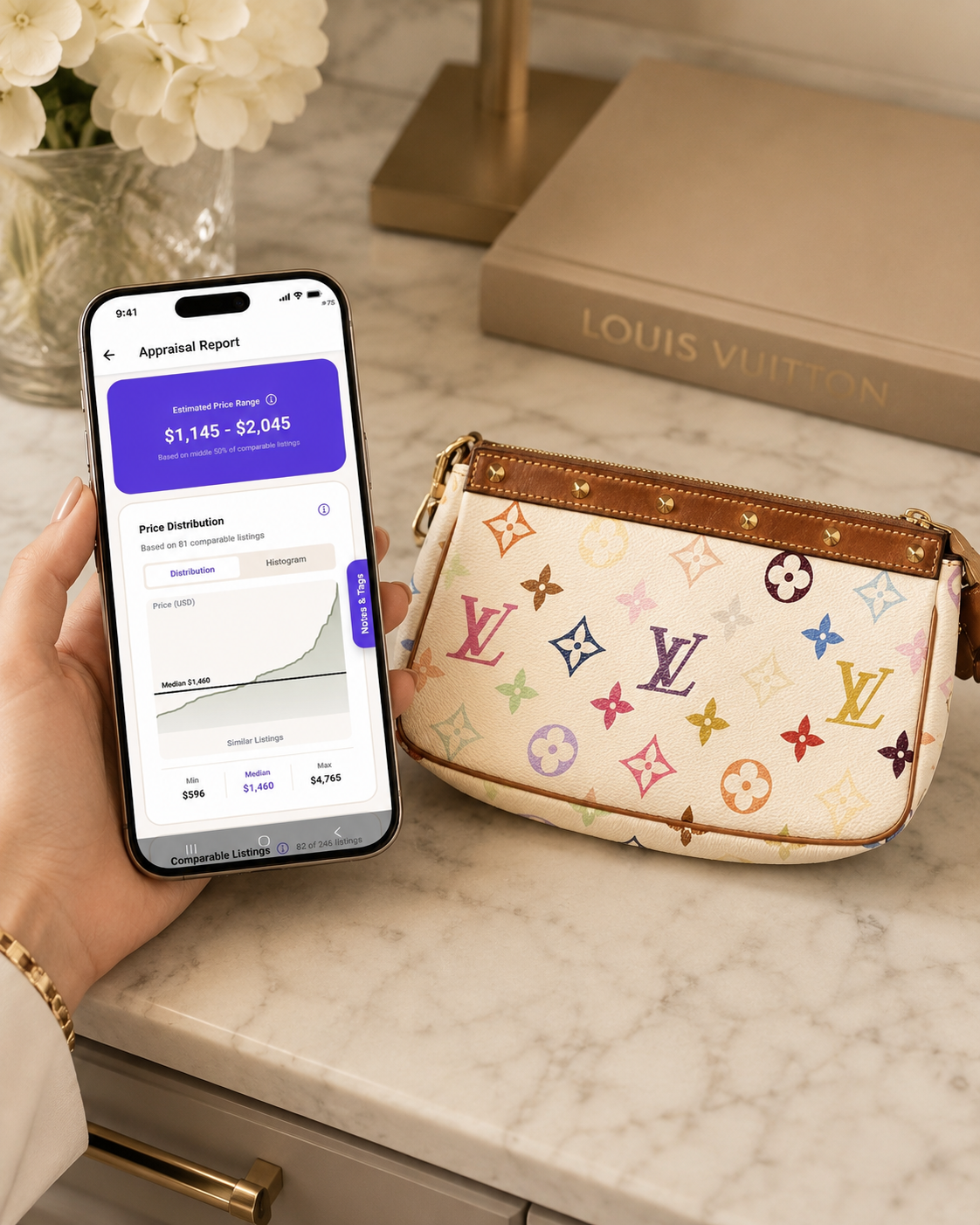
The “spread” is the gap between the average asking price and the average sold price. A narrow spread indicates a highly liquid market where buyers and sellers agree on value. A wide spread suggests a volatile market or a disconnect between seller expectations and buyer reality.
If you notice a wide spread for your specific bag, it is usually safer to price closer to the sold average. This positions your listing as a “deal” compared to the aspirational asking prices, often leading to a faster sale and fewer low-ball offers.
Visualizing Market Data with LuxPricer
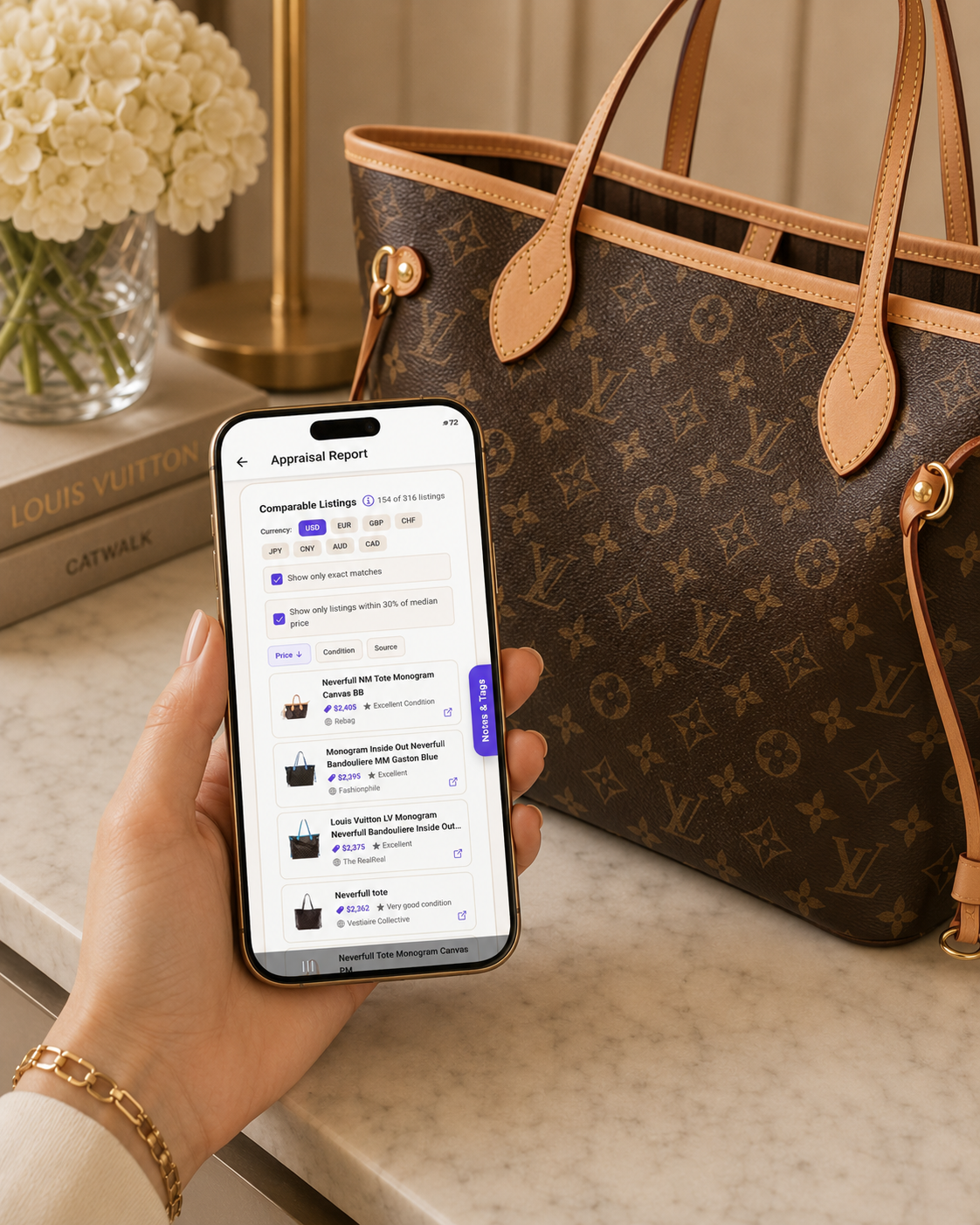
Manually searching through ended auctions and current listings is time-consuming and prone to human error. LuxPricer simplifies this by aggregating data from across the secondary market. Our price distribution insights provide a clear in-app view, allowing you to see exactly where your bag sits on the bell curve of market value.
Ready to see what your bag is actually worth? Use LuxPricer to get an instant estimate based on real-time market transactions and current competitive listings.
Try LuxPricer
Value your next luxury bag in under a minute
Download the app and generate a faster pricing estimate before you buy, sell, negotiate, or list your next bag.
Common Pitfalls in Price Comparison
When comparing sold vs asking price luxury bag data, ensure you are comparing like-for-like. Small details can cause significant price swings that make “average” data misleading.
- Condition Grade: A “New with Tags” sold price should not be used to price a “Good” condition bag.
- Inclusions: Bags sold with the original box, dust bag, and authenticity certificate typically command a 10-15% premium over “bag only” listings.
- Hardware Color: In certain brands, gold hardware may sell faster or for more than silver hardware, even if the asking prices are identical.
- Seller Reputation: Large, established resellers can often command higher asking prices because they offer authenticity guarantees and easy returns. As an individual seller, you may need to price slightly below their “sold” figures to attract a buyer.
The Final Verdict
While it is tempting to look at a high asking price and imagine that check in your bank account, the market is defined by what people pay, not what sellers ask. By prioritizing sold comps and using asking prices only to gauge your immediate competition, you create a realistic and effective sales strategy.
Success in the luxury resale market requires a balance of data and intuition. By weighting your research toward completed transactions, you ensure that your estimate is grounded in reality, helping you move your inventory efficiently while capturing the maximum possible value for your investment.