Price Distribution Insights
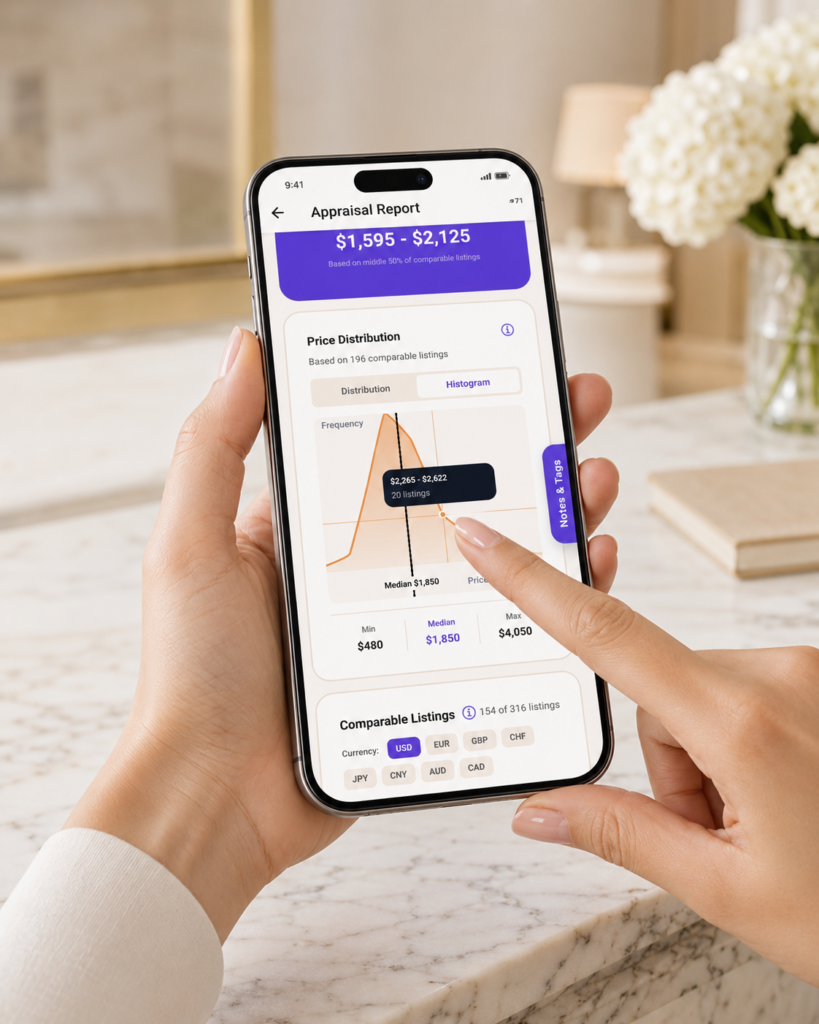
Understanding the resale market for high-end accessories requires more than a single number. To capture the full scope of the secondary market, sellers and collectors need to visualize the luxury bag price distribution. This data visualization feature within LuxPricer provides a comprehensive look at how specific models are priced across the global landscape, allowing users to see the spread between entry-level listings and premium-condition outliers.
By mapping out the low, median, and high price points of comparable items, LuxPricer removes the guesswork from the valuation process. Whether you are looking to move inventory quickly or hold out for the highest possible return, seeing the density of listings at specific price intervals is essential for a data-driven strategy. This tool is a core component of our LuxPricer Features Overview, designed to provide transparency in an often opaque market.
Price Check
Want to estimate a luxury bag faster?
Use LuxPricer to get a structured resale estimate from your phone, with market context and comparable pricing signals.


What is Luxury Bag Price Distribution?
Price distribution refers to the statistical spread of asking prices and final sale values for a specific handbag model, such as a Chanel Classic Flap or a Louis Vuitton Neverfull. Instead of providing a static average, which can be skewed by extreme outliers, our distribution graphs show you where the majority of the market sits.
When you analyze the luxury bag price distribution, you are looking at three primary data points:
- The Low End: Typically represents items with significant wear, missing accessories (like dust bags or authenticity cards), or sellers motivated by a fast liquidation.
- The Median: The middle point of the market. This is often the most accurate reflection of “fair market value” for a bag in standard pre-owned condition.
- The High End: Reserved for boutique-quality items, rare colorways, limited editions, or “New in Box” (NIB) condition listings.
Visualizing these points as a bell curve or a histogram helps you identify “sweet spots” where your bag is most likely to attract serious buyers without leaving money on the table.
How LuxPricer Visualizes Market Data
Our platform aggregates data from hundreds of reputable resale platforms, auction houses, and private marketplaces. Once our Photo Identification for Luxury Bags system confirms the exact model and year of your item, the distribution engine populates a real-time graph.
Identifying Market Clusters
In many cases, luxury bags do not follow a perfect curve. You may see “clusters” of listings at specific price points. For example, a specific Hermès Birkin might have a cluster at the $12,000 mark and another at $15,000. These clusters often correlate with specific condition grades or the presence of original receipts. Understanding these clusters allows you to position your listing more competitively.
Contextualizing the Spread
A wide distribution indicates high volatility or a significant impact of condition on value. A narrow distribution suggests a highly stable market where prices are standardized. To better understand these nuances, users can refer to our guide on How to Read and Interpret Luxury Bag Price Ranges, which explains how to translate these visual graphs into a final asking price.
Ready to Value Your Luxury?
Download the LuxPricer App
Get instant, market-driven pricing estimates powered by real-time luxury resale data.
The Importance of Outlier Detection
One of the most significant risks in manual price research is being misled by outliers. A single “aspirational” listing on a peer-to-peer marketplace priced 40% above market can give a seller a false sense of their bag’s value. Conversely, a “fire sale” listing can make a seller feel their asset has depreciated more than it actually has.
LuxPricer’s distribution model highlights these outliers so you can ignore them. By focusing on the “interquartile range”—the middle 50% of the market—you ensure your expectations remain realistic. This data is further refined when you generate Luxury Bag Valuation Reports, which provide a professional breakdown of why certain bags fall into specific segments of the distribution curve.
For Resellers & Boutiques
Turn market comps into a clearer selling price
LuxPricer helps you move from scattered listings to a more consistent valuation workflow.
Pricing Strategy and Market Velocity
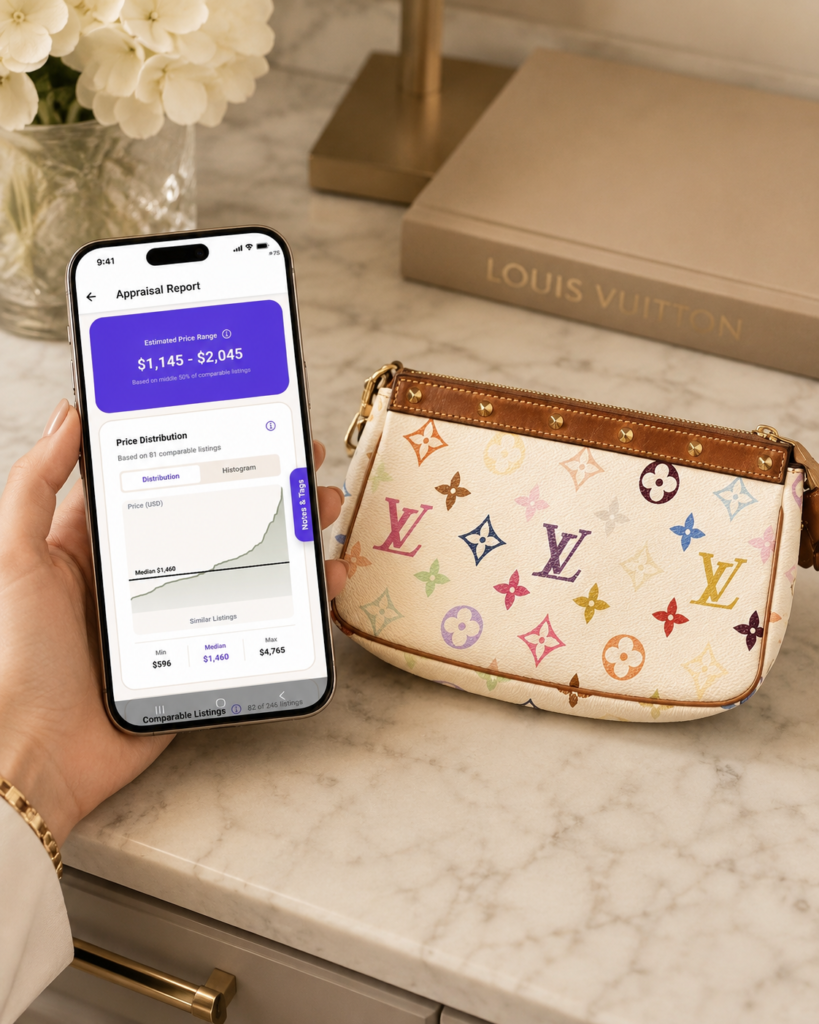
The luxury bag price distribution is not just about what a bag is worth; it is about how fast it will sell. Pricing your bag at the lower end of the distribution curve typically results in a faster transaction. Pricing at the median may take several weeks, while pricing at the high end requires a patient seller and a pristine item.
While Instant Price Estimates for Luxury Handbags give you a quick starting point, the distribution graph allows you to fine-tune that estimate based on your personal timeline. If you need liquidity today, the distribution shows you exactly where the “buy-it-now” threshold sits.
Temporal Shifts in Distribution
The distribution of prices is not static. It shifts based on seasonal demand, fashion trends, and brand price hikes. To imagine how these curves move over months or years, you can explore the Historical Market Context for Luxury Bags. Combining current distribution data with historical trends provides a powerful predictive tool for when to sell or when to buy.
Try LuxPricer
Value your next luxury bag in under a minute
Download the app and generate a faster pricing estimate before you buy, sell, negotiate, or list your next bag.
Maximize Your Resale Value with LuxPricer
Data is the most effective tool for any luxury handbag enthusiast. By moving beyond simple averages and embracing the full picture of market distribution, you protect your investment and ensure you are trading at the right price.
Ready to see where your bag fits in the current market? Use LuxPricer to analyze current price distributions and receive an accurate estimate for your luxury collection today.
Summary of Benefits
- Visual Clarity: See the full range of market prices at a glance.
- Condition Benchmarking: Understand how wear and tear move a bag along the distribution curve.
- Risk Mitigation: Avoid pricing your items based on unrealistic market outliers.
- Evidence-Based Selling: Use distribution data to justify your asking price to potential buyers.
By utilizing these insights, you transition from guessing to knowing. The luxury bag price distribution feature ensures that every user, from the casual seller to the professional reseller, has access to the same high-level data used by industry experts.