How to Avoid Underpricing Your Luxury Bag
The resale market for high-end accessories is highly competitive, and even experienced collectors often leave significant money on the table. When you decide to sell a piece from your collection, the goal is to find the “sweet spot”—a price high enough to reflect the brand’s value but realistic enough to attract a buyer. To avoid underpricing luxury bag listings, you must look beyond the surface level of the brand name and analyze the specific variables that drive secondary market premiums.Understanding the nuances of the market is the first step toward a successful sale. Before setting your final number, it is essential to learn how to read and interpret luxury bag price ranges. This foundational knowledge ensures you aren’t just guessing based on what you originally paid at retail, but rather pricing based on current liquidity and demand.
Price Check
Want to estimate a luxury bag faster?
Use LuxPricer to get a structured resale estimate from your phone, with market context and comparable pricing signals.


Common Mistakes That Lead to Underpricing
Underpricing usually happens when a seller overlooks a specific detail that collectors value. Here are the most frequent oversights:1. Ignoring “Unicorn” Hardware and Color Combinations
A black Chanel Medium Flap with Gold Hardware is a classic, but a seasonal “So Black” edition with black hardware often commands a much higher premium. If you price a rare combination the same as a standard one, you are essentially giving away hundreds, or even thousands, of dollars in potential profit. Always research whether your specific leather and hardware combination was a limited run.2. Failing to Account for Recent Price Increases
Luxury houses like Hermès, Louis Vuitton, and Chanel implement price hikes annually. If the retail price of your bag has increased by 15% since you bought it, its resale value has likely climbed as well. Sellers who price based on their original receipt rather than the current replacement value often underprice their items significantly.3. Neglecting the Value of Full Sets
A “full set”—which includes the original box, dust bag, authenticity card, and original receipt—adds a layer of trust and convenience for the buyer. Many sellers list their bags at the “average” market price even when they have the full set. In reality, a full set can often justify a 10% to 15% premium over a “bag only” listing.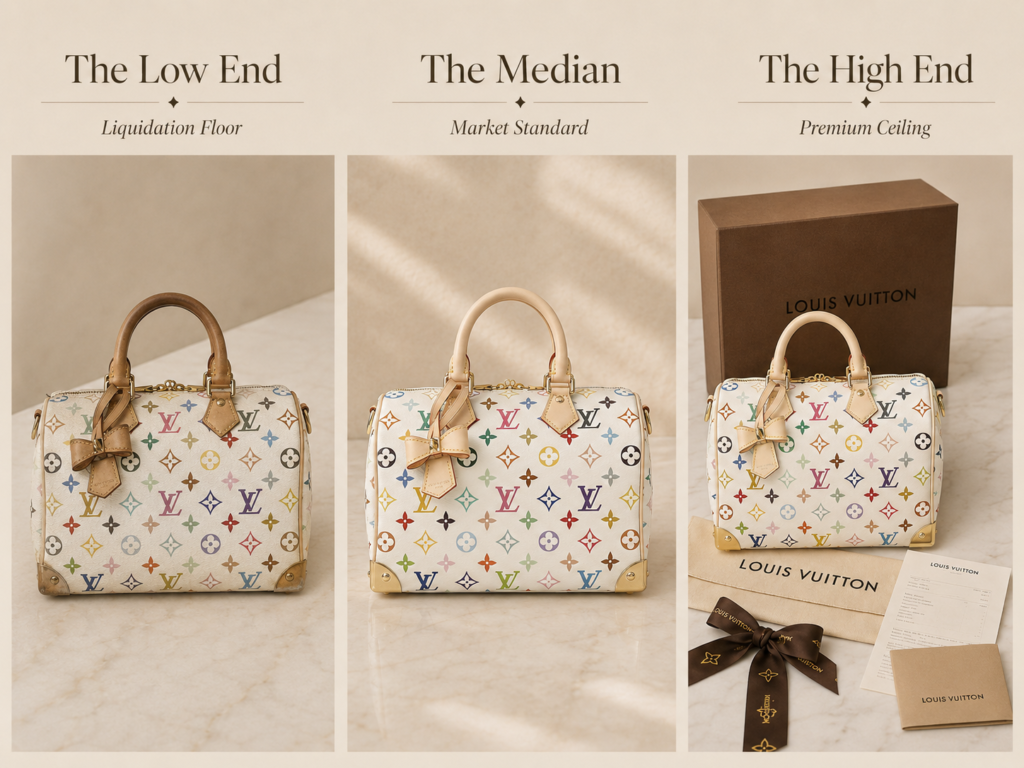
How to Validate Your Asking Price
To ensure you aren’t selling yourself short, you need to look at hard data rather than anecdotal evidence from social media or single-platform searches.Analyze Sold Comps vs. Active Listings
One of the most effective ways to protect your margins is to how to compare sold vs. asking prices. Active listings tell you what people hope to get, but sold listings tell you what the market is actually willing to pay. If you see a bag listed for $3,000 but similar items have consistently sold for $2,800, you know where the ceiling is. Conversely, if everything is selling instantly at $2,800, you might be able to push your price higher.Look at the Full Price Distribution
Pricing is rarely a single number; it is a spectrum. By using price distribution insights, you can see where the majority of sales occur. If 80% of sales for your specific model happen between $1,500 and $1,800, and you were planning to list at $1,400 for a “quick sale,” you are likely underpricing. You can often achieve that same quick sale at $1,600 if your bag’s condition is superior to the bottom-tier listings.Ready to Value Your Luxury?
Download the LuxPricer App
Get instant, market-driven pricing estimates powered by real-time luxury resale data.
The Role of Condition Grading in Pricing
Condition is subjective, and being too humble about your bag’s state is a fast way to underprice it. While you must be honest about flaws, you should also recognize the value of a “Like New” or “Pristine” designation.- Pristine: Never worn, often with plastic on the hardware. These should be priced near or sometimes above retail for high-demand models.
- Excellent: Used only a few times with no visible wear. These should sit at the top of the resale price range.
- Very Good: Minor signs of wear, such as light scuffing on corners. This is where most resale bags fall.
For Resellers & Boutiques
Turn market comps into a clearer selling price
LuxPricer helps you move from scattered listings to a more consistent valuation workflow.
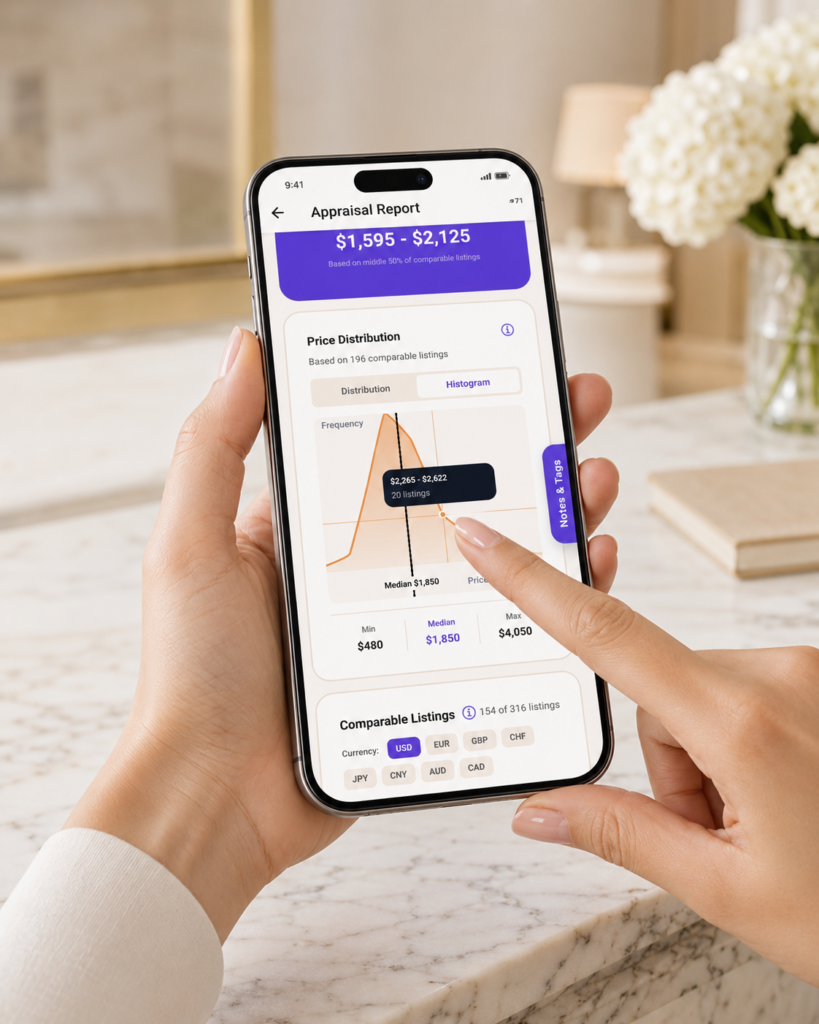
Using LuxPricer to Secure the Best Estimate
Manually searching through dozens of resale sites to find comparable items is time-consuming and often leads to inconsistent data. LuxPricer simplifies this process by aggregating market data to provide a comprehensive view of what your bag is worth right now.Try LuxPricer today to get an accurate estimate of your bag’s resale value based on real-time market trends and historical data.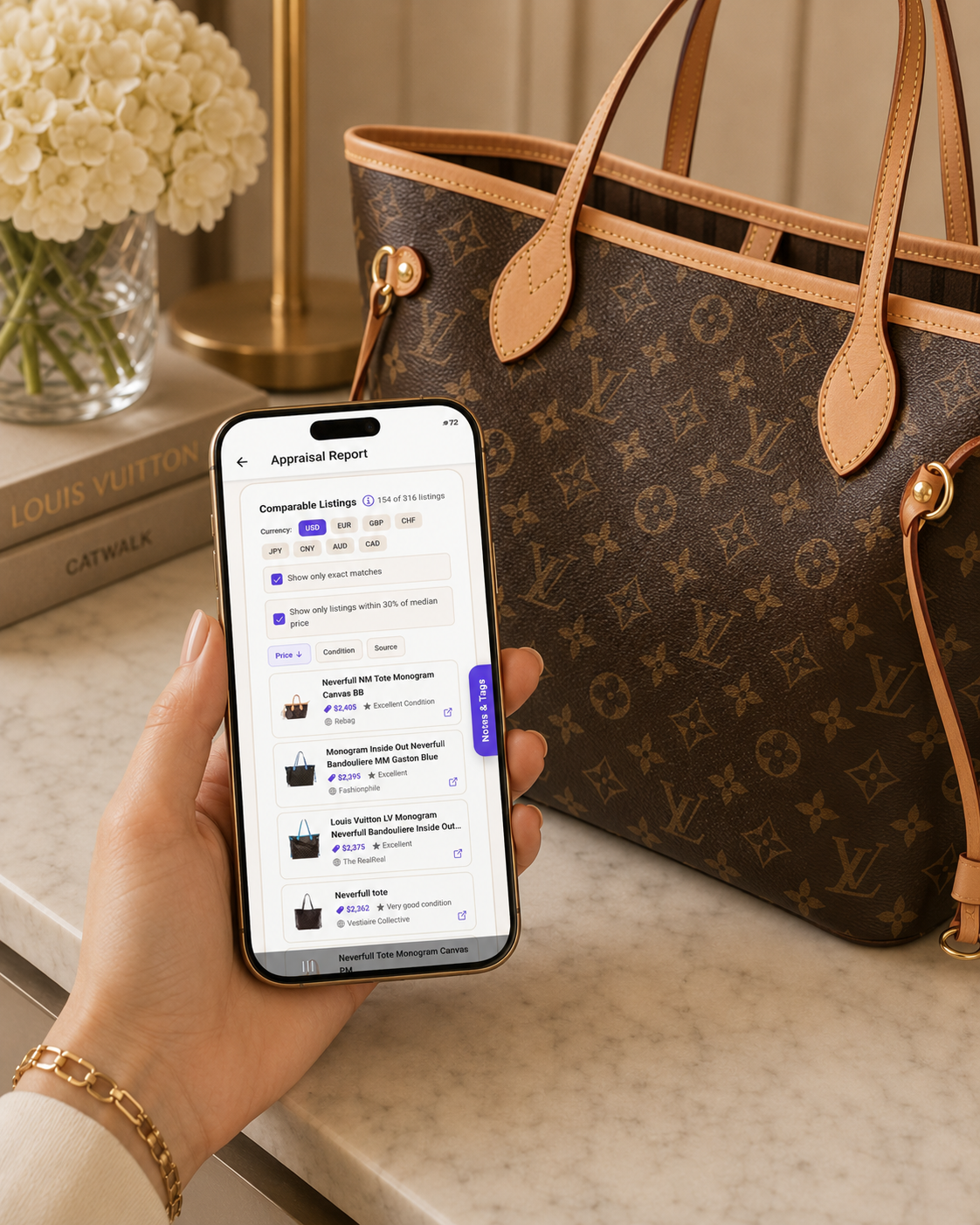
Try LuxPricer
Value your next luxury bag in under a minute
Download the app and generate a faster pricing estimate before you buy, sell, negotiate, or list your next bag.
Final Checklist to Avoid Underpricing
Before you hit “publish” on your listing, go through this final checklist to ensure you haven’t missed a value-add:- Check the Year: Is your bag from a particularly desirable era or a specific designer’s tenure (e.g., Phoebe Philo at Céline)?
- Verify the Material: Is it a standard leather, or a more expensive Togo, Epsom, or exotic skin?
- Assess the Hardware: Is it gold-plated (vintage), solid brass, or palladium?
- Search for “Sold” outliers: Did a similar bag recently sell for a surprisingly high price? Find out why—it might be a trend you can capitalize on.